
Lower back pain is one of the most common reasons people seek healthcare in the UK. It affects people of all ages and backgrounds — and for many, it becomes a recurring problem that disrupts work, sleep, and everyday life.
The good news is that the vast majority of lower back pain does not require surgery. In fact, research consistently shows that non-surgical approaches are effective for most people, even those with disc problems, nerve-related symptoms, or long-standing pain.
At MG Osteopathy in Islington and Hackney, we treat lower back pain every day. This guide covers the most effective non-surgical treatment options available, what the evidence says, and how to find the right approach for your situation.
Common Symptoms of Lower Back Pain
Lower back pain can present in many different ways. Common symptoms include:
- A dull, persistent ache across the lower back
- Sharp pain with certain movements or positions
- Stiffness after sitting, standing, or lying down
- Pain that radiates into the buttocks, hip, or leg
- Numbness or tingling travelling down the leg
- Weakness in the leg or foot
- Symptoms that flare up after activity or prolonged rest
Some people experience constant pain, while others have intermittent flare-ups. Both patterns benefit from proper assessment and the right treatment approach.
Why Non-Surgical Treatment Works for Most People
Surgery for lower back pain is far less common than many people assume. Studies show that most back pain — including disc herniations, sciatica, and degenerative changes — responds well to conservative management.
Non-surgical treatment works because most lower back pain is mechanical in nature. This means it is driven by how the spine moves, how the surrounding muscles function, and how load is distributed through the joints and discs. Addressing these factors directly produces lasting results without the risks associated with surgical intervention.
Moreover, surgery does not address the underlying movement habits, muscle weaknesses, or postural patterns that caused the problem in the first place. Non-surgical rehabilitation does.
Non-Surgical Treatment Options for Lower Back Pain
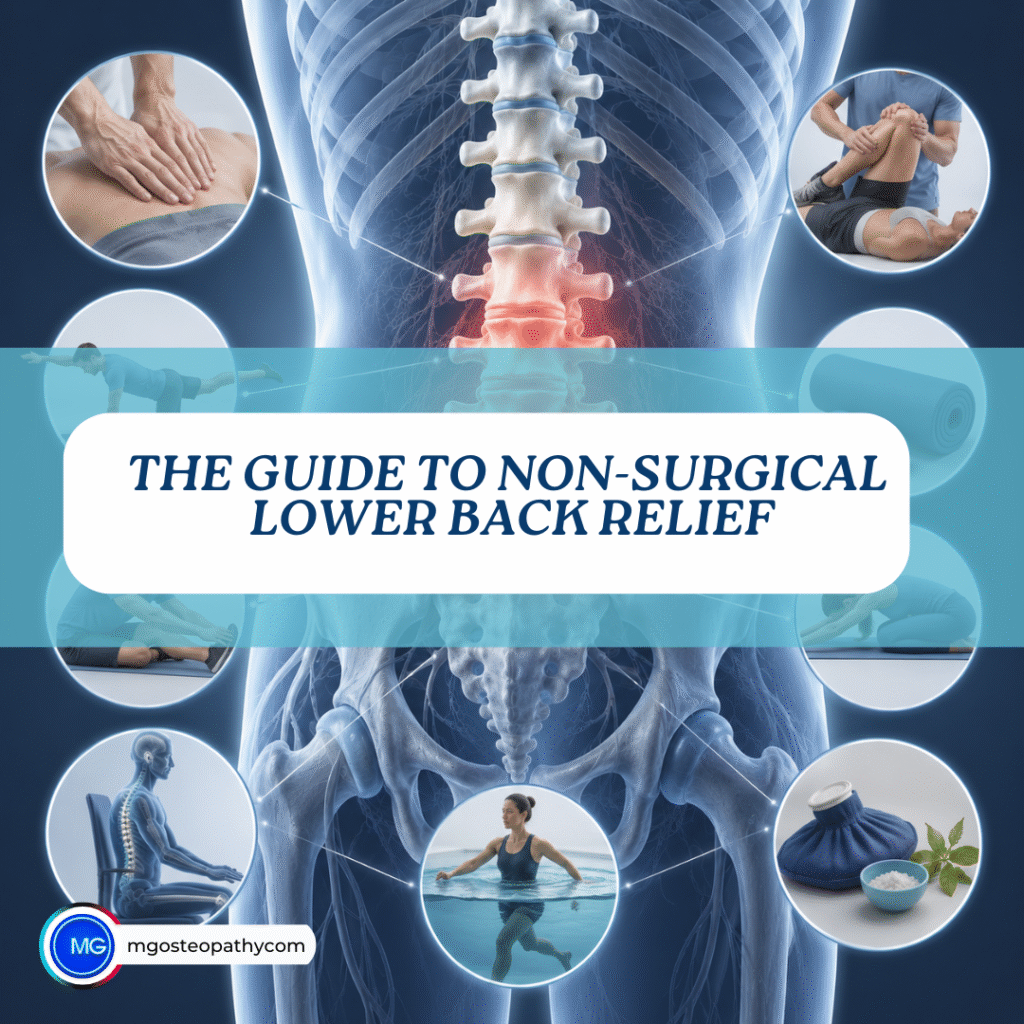
Osteopathy
Osteopathy takes a whole-body approach to lower back pain. Rather than treating the area of pain in isolation, osteopaths assess how the spine, pelvis, hips, and surrounding soft tissues are all working together.
Treatment typically includes joint mobilisation, soft tissue techniques, and myofascial release to reduce pain and restore movement. Osteopaths also provide tailored rehabilitation advice to address the root cause of the problem.
At MG Osteopathy in Islington, osteopathy is one of our most effective tools for both acute and chronic lower back pain.
Physiotherapy
Physiotherapy focuses on restoring movement, strength, and function through hands-on treatment and targeted exercise rehabilitation. For lower back pain, physiotherapy typically combines manual therapy with a structured programme of core strengthening, mobility work, and movement retraining.
It is particularly effective for patients recovering from disc injuries, postural strain, and sports-related back problems.
Sports Massage
Sports massage is a highly effective treatment for lower back pain driven by muscle tension, tightness, and soft tissue restriction. It works by releasing tight muscles around the lumbar spine, hips, and glutes — areas that commonly contribute to lower back pain when they are overloaded or restricted.
Regular sports massage can also support recovery between osteopathy or physiotherapy sessions.
Shockwave Therapy
Shockwave therapy is a clinically proven, non-invasive treatment that uses acoustic pressure waves to stimulate tissue repair and reduce chronic pain. It is particularly useful for lower back pain that has not responded to manual therapy alone.
It works by increasing blood flow to the affected area, breaking down areas of chronic soft tissue restriction, and stimulating the body’s natural healing response. Treatment is quick, effective, and requires no downtime.
Exercise Rehabilitation
Exercise rehabilitation is one of the most important components of long-term lower back relief. Passive treatment alone — whether that is massage, manipulation, or any other hands-on approach — is unlikely to produce lasting results without addressing the underlying weakness and movement habits that are maintaining the problem.
A well-designed rehabilitation programme for lower back pain typically includes:
- Deep core activation and lumbar stabilisation
- Glute strengthening to reduce load through the spine
- Hip flexor and hamstring mobility work
- Movement pattern retraining for everyday activities
- Gradual return to exercise, sport, or physical work
Postural and Ergonomic Advice
For many patients — particularly desk workers and those in sedentary occupations — postural habits and workstation setup play a significant role in maintaining lower back pain. Addressing these factors is an essential part of any comprehensive treatment plan.
Simple changes to chair height, screen position, keyboard placement, and movement habits throughout the working day can make a meaningful difference to lower back symptoms over time.
Lifestyle Modifications
Alongside clinical treatment, certain lifestyle factors have a strong evidence base for reducing lower back pain:
- Regular movement — avoiding prolonged periods of sitting or standing without breaks
- Sleep position — sleeping with a pillow between the knees when on your side can reduce lumbar strain
- Stress management — chronic stress increases muscle tension and pain sensitivity, both of which contribute to lower back pain
- Weight management — excess weight increases the load through the lumbar spine and can maintain or worsen symptoms
- Hydration — the intervertebral discs rely on adequate hydration to maintain their height and shock-absorbing function
How We Approach Lower Back Pain at MG Osteopathy, Islington
At MG Osteopathy in Islington and Hackney, every patient begins with a thorough clinical assessment. We do not offer a one-size-fits-all approach. Instead, we take the time to understand what is driving your symptoms, how long the problem has been present, and what your goals are.
From there, we build a treatment plan that may combine osteopathy, physiotherapy, sports massage, shockwave therapy, and rehabilitation — depending on what your back needs most.
Our aim is straightforward. Reduce your pain, restore your movement, and give you the tools to stop it from coming back.
When Should You Seek Help for Lower Back Pain?
If your lower back pain has been present for more than a few days and is not improving, it is worth getting assessed. Early treatment tends to produce faster, more complete recovery and reduces the risk of the problem becoming chronic.
Seek prompt medical advice if your lower back pain is accompanied by:
- Pain, numbness, or tingling traveling into the leg or foot
- Weakness in the leg, foot, or toes
- Symptoms that came on after a fall, accident, or impact
- Unexplained weight loss or fatigue
Seek urgent medical attention if you experience:
- Any changes in bladder or bowel function
- Numbness in the inner thighs or groin area
- Rapidly worsening symptoms
These symptoms can indicate a serious condition requiring immediate assessment.
Lower Back Pain Treatment at MG Osteopathy – Islington and Hackney, London
If you are looking for back pain treatment in Islington or Hackney, MG Osteopathy offers a full range of non-surgical treatment options under one roof. We regularly help patients with acute and chronic lower back pain, disc-related problems, sciatica, postural strain, sports injuries, and recurring flare-ups.
Whether you have been dealing with back pain for weeks or years, we will give you a clear picture of what is driving it and a structured plan to resolve it.
📞 Any questions? Call us: +44 7809 575299
Frequently Asked Questions
Can non-surgical treatment really help with a slipped disc?
Yes. Most disc herniations respond well to conservative treatment. Osteopathy, physiotherapy, and targeted rehabilitation reduce nerve irritation, restore movement, and support the disc’s natural recovery process. Surgery is rarely necessary.
How quickly will I feel better with non-surgical treatment?
Many patients notice improvement within two to four sessions. However, this depends on how long the problem has been present and what is driving it. Chronic or long-standing back pain typically requires a longer course of treatment and rehabilitation.
Is back pain treatment in Islington covered by insurance?
Many private health insurance policies cover osteopathy and physiotherapy. It is worth checking your policy directly, as cover varies between providers. MG Osteopathy accepts patients both privately and through certain insurance providers.
What is the difference between osteopathy and physiotherapy for lower back pain?
Both are effective for lower back pain and share many techniques. Osteopathy takes a whole-body approach, focusing on how the spine, pelvis, and surrounding structures work together. Physiotherapy places a stronger emphasis on exercise-based rehabilitation. The right choice depends on your symptoms and what is driving them.
📅 Ready to get started? Contact MG Osteopathy in Islington and Hackney to book your assessment today.


